
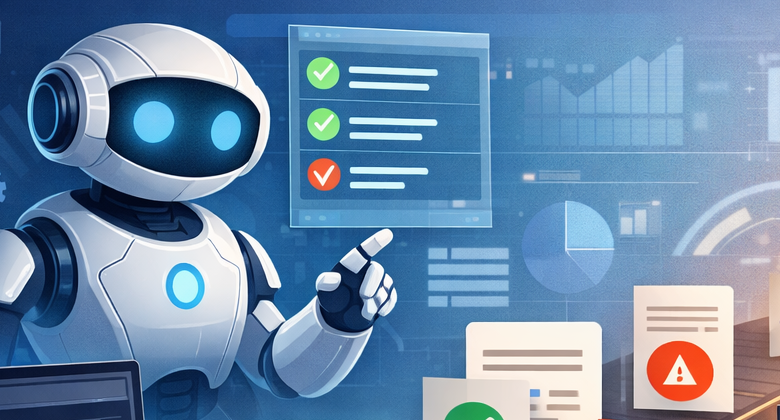
CI/CD automated what happens after code is written: build, test, scan, deploy. The next step is automating work around code: triage, upgrades, test generation, migrations, and recurring maintenance. This is not a single pipeline job. It is a delegated task loop that reads context, proposes a change, runs checks, and produces a reviewable artifact.
An agentic repo is a repository wired to accept tasks, execute them in a constrained runner, and deliver results as PRs with logs and evidence. The value is leverage and reduced toil, not hands-free shipping. The product is guardrails: permissions, reproducibility, and a consistent PR contract that humans can audit and merge.
For the last decade, teams got good at automating the tail end of development. You push commits and the system reliably builds and deploys. That is classic CI/CD.
But the expensive part of modern engineering is increasingly the work that surrounds code: keeping dependencies current, writing missing tests, chasing flaky builds, trimming alert noise, maintaining docs, and cleaning up issue backlogs. This work is real, necessary, and repetitive.
That is where the new pattern shows up: agentic repos. Instead of only running pipelines, the repo becomes a place where you can delegate bounded work to an automated worker and get back drafts you can review.
The key framing
- CI/CD is automation of steps
- Agentic repos are automation of tasks
- A step is deterministic: run the linter, build the binary, deploy the artifact.
- A task has context and judgement: investigate a bug report, propose a fix, update tests, and present a PR with rationale.
What an Agentic Repo is (in practice)
Strip the buzzwords away and an agentic repo is three things:
1) Task Interface
A clean way to request work that is more specific than “write code” and less rigid than a pipeline definition. Examples:
- Issue labels like ai-task or needs-repro
- Slash commands in issues or PRs
- A lightweight form or queue
2) Safe Execution Box
A constrained runner that can:
- Check out the repo
- Read files and history
- Run builds, tests, linters
- Create a branch and commit changes
It should not be able to touch production, access broad secrets, or phone home with sensitive data.
3) Review Surface
The output is not a chat response. The output is a PR and supporting artifacts:
- Diffs
- Test results
- Logs
- Notes on what it tried
- Links to evidence
The PR is the Contract!
This is the easiest way to keep humans in control without slowing everything down. If the change is reviewable, you can adopt it gradually. If the output is just prose, you cannot audit it. This is SUPER important and I cannot emphasize it more, LLMs make mistakes, we need a human review as part of the flow.
The Task Loop
A practical agent workflow usually looks like this:
- Observe: gather context (issue, code areas, logs, recent PRs)
- Plan: decide a narrow approach and success criteria
- Execute: modify files and run checks
- Validate: re-run tests, confirm behavior
- Deliver: open a PR with explanation, risks, and rollback
Why this is different from “faster CI”
CI runs when you push. Tasks run when you ask. Tasks often require iteration and contextual decisions. That is why they fit poorly into a static pipeline graph and better into a delegated worker model.
Where this pays off first?
The best early wins are boring on purpose. Places where teams have endless queues of work that is too small to prioritize but too important to ignore:
- Dependency upgrades: bump a library, fix breakages, update lockfiles, run the suite, open a PR
- Test coverage fill-in: add regression tests for a bug report, cover edge cases, tighten assertions
- Issue triage: de-duplicate, ask for repro steps, label and route, summarize patterns
- Log and error analysis: trace an error string to code, propose candidate fixes, add guardrails
- Docs and onboarding: update READMEs, add runbooks, capture tribal knowledge near the code
- Refactors with guardrails: mechanical changes across the repo with tests and formatting kept clean
Keep in mind The PR is the Contract!!!
A workflow that makes this real
- Task request: a human requests a bounded job, for example “Upgrade X to the latest minor and fix failures.”
- Context bundle: the system collects the relevant pieces so the agent does not guess (related files, recent PRs, failing logs, constraints like “no breaking API changes”).
- Constrained runner: give the agent a sandbox and a limited tool belt. If it cannot run tests, it should not claim success.
- PR format standard: require a predictable PR template: what changed, why, commands run and results, evidence reviewed, risks, rollback.
- Human review and merge gate: the agent writes drafts. Humans decide.
Common failure modes to anticipate
- Silent assumptions: the agent fixes the wrong thing because context was missing
- Flaky tests: the agent cannot validate, so it produces shaky PRs
- Unbounded scope: the task expands and becomes hard to review
- Missing telemetry: no logs, no commands, no proof
Guardrails that matter! (more than the model)
The fastest way to kill trust is to let an agent do too much, too fast, with no audit trail. A few guardrails make this production-grade.
1) Least privilege by default
- Read-only unless the task requires writes
- No production credentials in the runner
- Separate and narrowly scoped tokens
2) Reproducibility where it counts
- Pin tool versions where possible
- Make the runner environment consistent
- Prefer deterministic commands over ad hoc guessing
3) Proof over confidence
- If it changes code, it should run tests
- If tests do not exist, require explicit human signoff
- Require logs and commands in the PR
4) Scope control
- Tasks should be small enough to review
- If the agent needs multiple attempts, it should explain each attempt
- Prefer one PR per task rather than sprawling bundles
5) A clear escalation path
- When the agent is blocked, it should ask for a decision, not improvise
- Example: “I can fix this by changing the API or by adding a wrapper. Which do you prefer?”
Should you build this now?
Worth it when:
- You have steady maintenance toil
- Your repo has decent tests and linting
- PR review culture is healthy
- You can invest in isolation and observability
Not worth it yet when:
- Builds are flaky and tests are sparse
- Ownership and review is chaotic
- You cannot isolate secrets from runners